License the System That Ends Lost Luggage.
Synova's destination tag-lock technology is engineered to airline baggage-handling spec and available for licensing across luggage product lines. This is an infrastructure licensing opportunity for manufacturers and carriers — not a consumer offer.
The Problem
2.4 Million Bags Mishandled Every Year. That's a Cost Line, Not Just a Traveler Complaint.
Every mishandled bag becomes a claims cost, a service recovery cost, and a small hit to brand trust — multiplied across every manufacturer and carrier in the industry. It happens at the tag, not in the terminal. And the tag is a solved engineering problem once someone fixes it structurally.
Bags mishandled globally every year (SITA Baggage IT Insights)
Tag Damage
Baggage tags are paper. They catch on conveyor belts, rip in the rain, and smear when wet. An unreadable tag stops the routing process cold — and the claim lands on someone's desk.
Tag Separation
The barcode loop attaches at the handle. Bags get compressed, handles get yanked, and tags detach completely during transfer — a structural failure point, not user error.
Misrouting at Transfer
On multi-stop itineraries, bags are re-tagged at each connection. A single bad re-tag sends the bag to a different city — and the operational cost of tracking it down follows.
Tracking Doesn't Move the Number
Bluetooth trackers tell a traveler where a bag ended up after it's already lost. They don't reduce claims volume, they don't reduce mishandling rate, and they don't touch the underlying liability. Prevention has to happen at the tag.
The Mechanism
Not a Feature Add-On. A Structural Fix, Engineered to Spec.
The destination tag-lock is a built-in sleeve molded into the shell that holds the airline's paper destination tag flat, fixed, and fully scannable for the entire journey. It replaces the failure point instead of monitoring it.
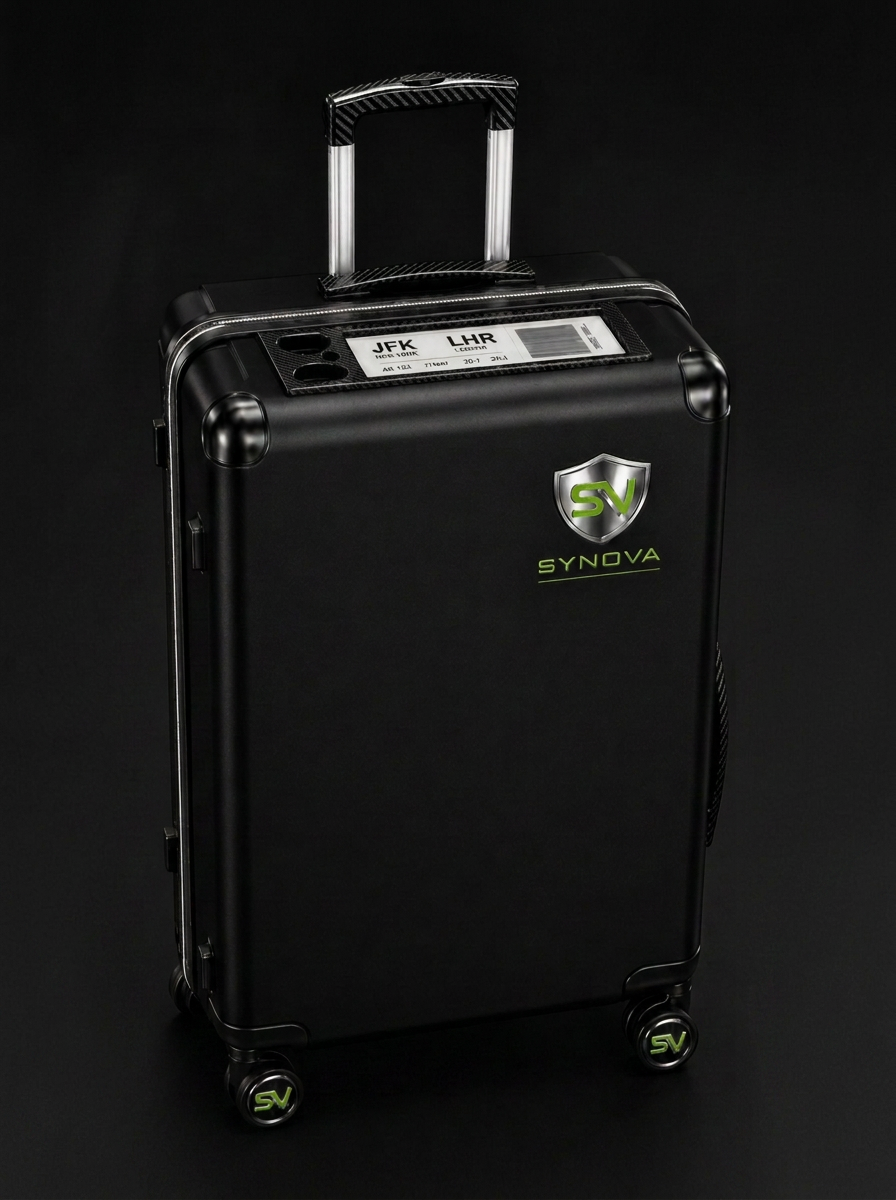
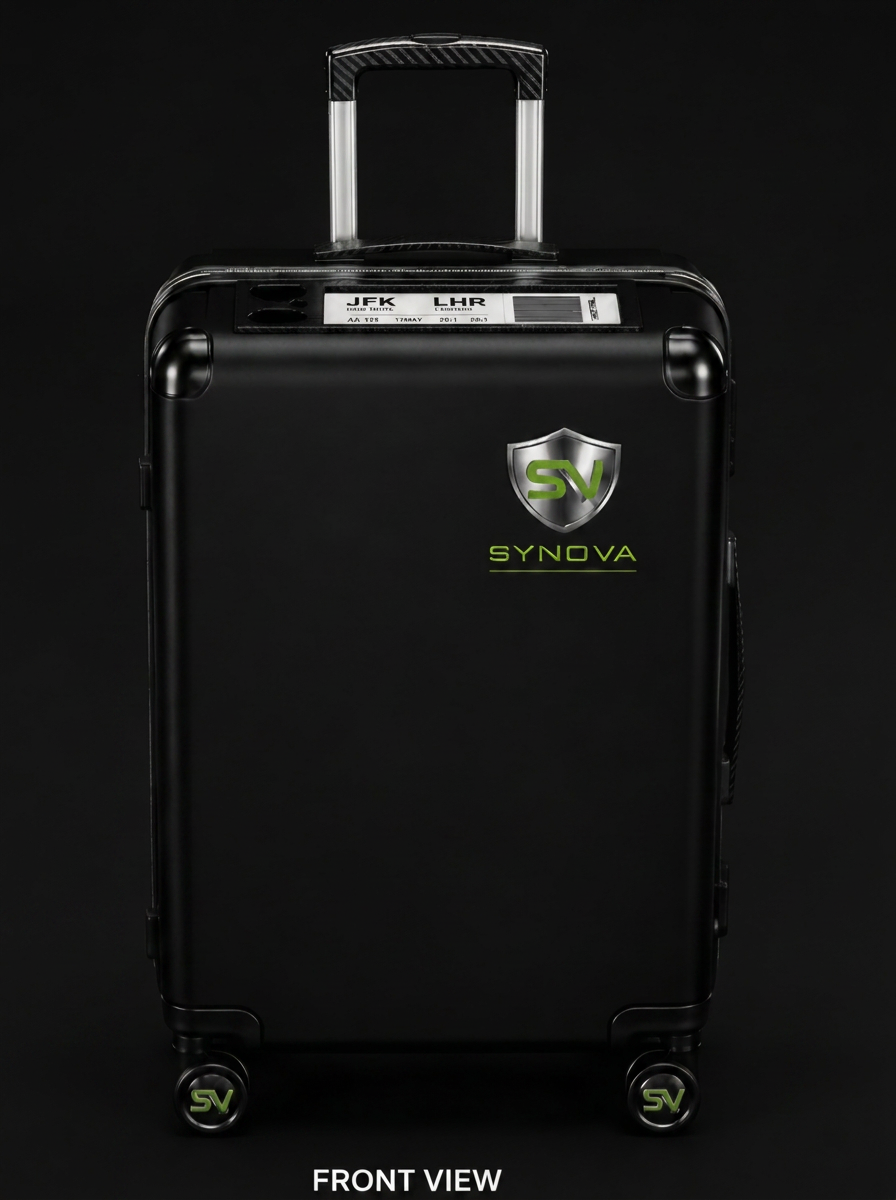
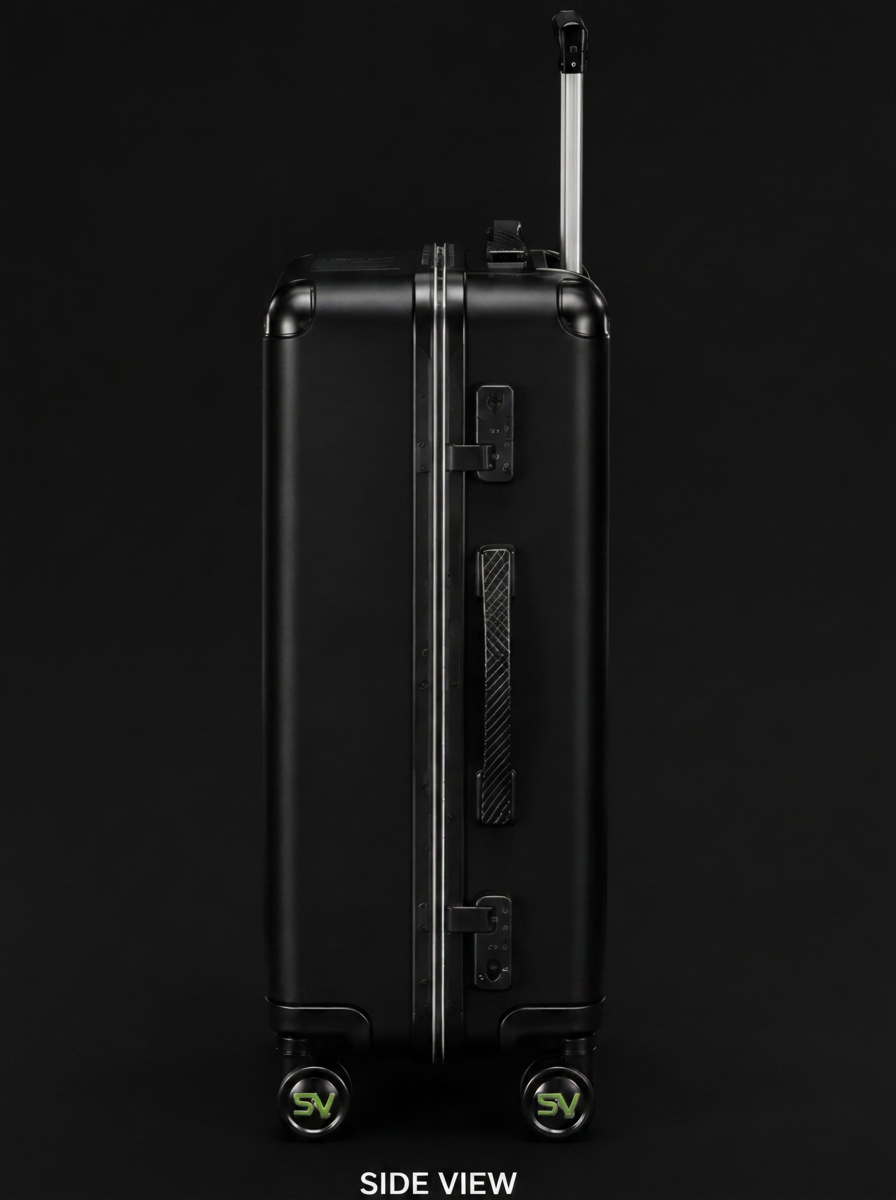
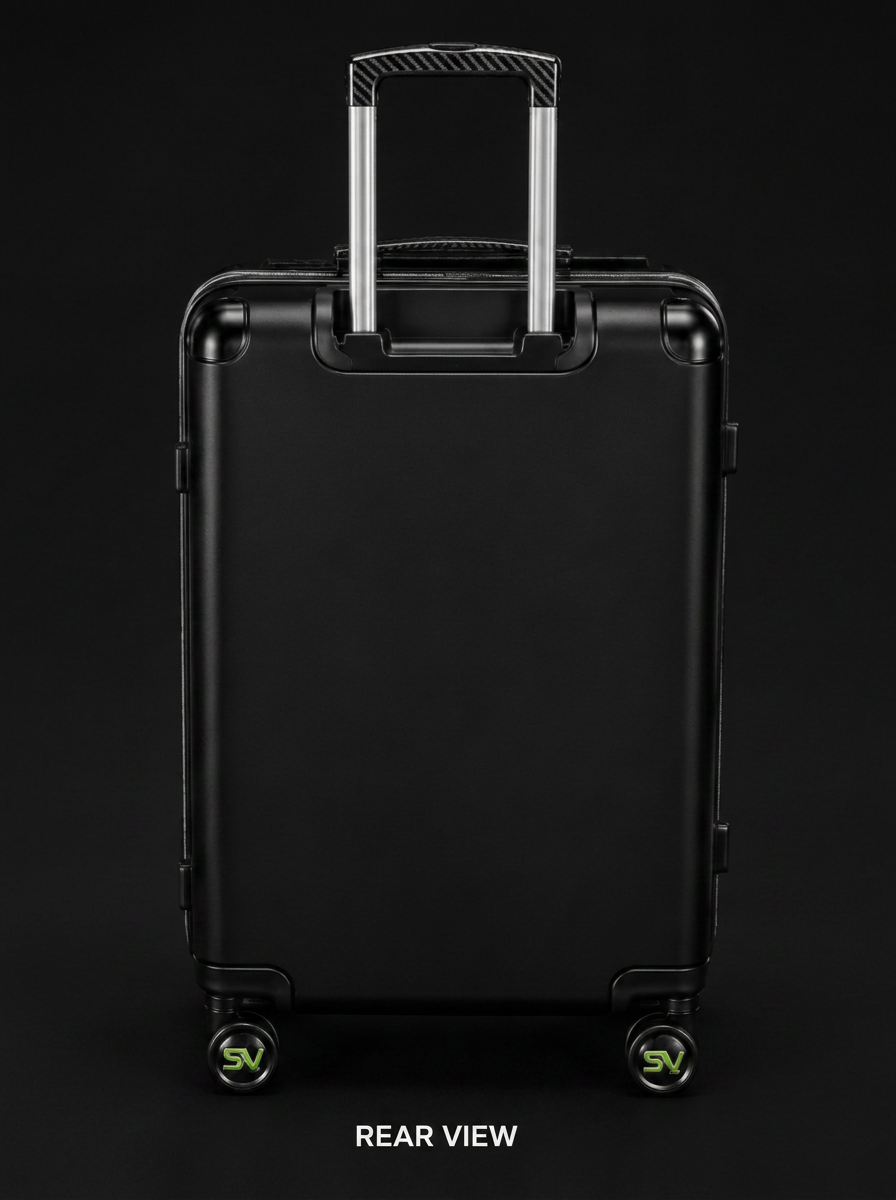
Destination Tag-Lock Sleeve
A molded sleeve holds the airline's destination tag flat and fixed to the shell. No catching, no tearing, no detaching — the tag stays scannable from check-in to carousel.
Engineered to Airline Spec
Sleeve geometry, tag position, and scan angle are built to baggage-handling industry standards, and are compatible with all major global airlines' handling systems.
Zero Electronics, Zero New Liability
No battery, no Bluetooth, no GPS, no firmware. The protection is entirely mechanical — which means no added regulatory, safety, or data-privacy surface for a licensee to manage.
Patent-Filed, Manufacturing-Ready
The mechanism is covered by filed patents and has an established manufacturing partner in Shenzhen — this is a production-ready system, not a concept sketch.
Why License, Not Build or Wait
A Trillion-Dollar Travel Category. A Narrowing Window to Move First.
Luggage demand doesn't disappear — it's tied to a persistent, high-frequency travel category that spans air, rail, and road. The question for an established manufacturer or carrier isn't whether this problem gets solved. It's whether you're the one who solves it first.
Build In-House
Years of R&D, uncertain freedom-to-operate against existing filed patents, and no guarantee of arriving at the same mechanical solution — while the cost of licensing continues to rise around you.
Do Nothing
Mishandling costs continue at their current rate, and a competitor who licenses this first sets the new baseline for what travelers expect from a suitcase.
License Now
A patent-filed, manufacturing-ready mechanism, available to integrate across existing product lines without years of internal R&D risk.
Licensing Model
Infrastructure Licensing, Built for Scale Across Product Lines.
The tag-lock system is designed to be licensed as infrastructure — integrated into a manufacturer's existing shells and product lines rather than sold as a standalone accessory.
Infrastructure Licensing
Integrate the tag-lock mechanism across an existing suitcase line, with engineering support for tooling and shell integration.
Category / Territory Licensing
Exclusivity is structured around performance milestones — volume and rollout commitments — so the technology keeps moving to market rather than sitting on a shelf.
Co-Development / Private Label
For partners who want a dedicated line built around the system, with joint input on shell design and rollout strategy.
Commercial terms, exclusivity structures, and timelines are discussed directly on a licensing call — this page is an overview, not a term sheet.
Where This Stands Today
This Is Already Moving.
Early-stage licensing discussions are underway with a leading global luggage manufacturer (Samsonite), routed through an independent licensing advisor.
Outreach has also been made to Columbia Sporting Luggage and 10 manufacturers in China for licensing evaluation.
Patents have been filed covering the destination tag-lock mechanism.
A manufacturing partner is established in Shenzhen, with production already running for the first product line.

David Crouch
Originated the destination tag-lock system and holds the filed IP behind it. Leads product and manufacturing.

Frank DeLuca
Directs go-to-market and licensing outreach, including this program's demand-generation strategy.

Dane Madsen
20 years of licensing experience, currently leading outreach to major luggage manufacturers on Synova's behalf.
This Window Closes for Someone. Make Sure It's Not You.
Pick a time before a competitor licenses this first.
No commitment required · All conversations are confidential
Frequently Asked Questions
What Decision-Makers Ask.
Every Year You Wait,
This Gets More Expensive to License.
Book a time to see the mechanism, review the IP position, and find out what licensing looks like for your organization.